How to Read a Casino Scene in a Film
Read a casino scene in a film by separating camera choices from factual claims, so you can enjoy its mood without mistaking it for a real venue.
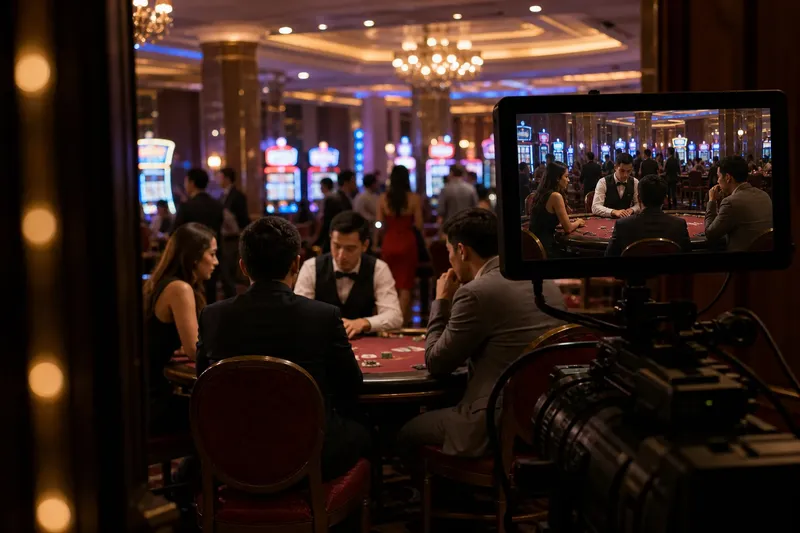
A casino scene in a film can make a room seem welcoming, tense or faintly ridiculous before anyone speaks. To read a casino scene in a film carefully, watch what the camera shows, how long it holds the view and what it leaves out. Those choices create a mood; they do not establish what a real casino in Hải Phòng is like.
Start with the impression the scene wants you to accept
Before identifying games or décor, name the first impression. Is the room presented as glamorous, anonymous, crowded, private or unsettling? Then ask what makes that impression feel convincing.
A table, coloured lights, a uniform and a handful of chips may be enough to signal a casino to an audience. The combination says little about a real venue’s layout, visitors or operation. Treat each detail as part of the film’s argument, not as a tour.
Choose what to watch for
For atmosphere, follow the lighting, sound and pace. These often do more work than the scenery. A slow camera movement and hushed soundtrack can make an ordinary exchange feel loaded; quick cuts and layered noise can make the same space feel restless.
For venue design, watch how the scene directs movement. Notice which doorway characters use, what lies beyond it and whether the camera gives you a clear sense of distance. A film may compress several functions into one convenient room because the story needs a meeting place. That is a production choice, not a floor plan.
For the social impression, track who seems comfortable and who appears out of place. Costume, posture and access to the frame can distinguish insiders from visitors without explaining any real social pattern. The scene presents a designed relationship, not a representative sample.
If you want factual information about a casino in Hải Phòng, a fictional sequence is the wrong source. Consult current venue information and relevant local guidance. Film can show how casino leisure is imagined, but it cannot establish what a particular venue offers or how it operates.
Separate framing from the room itself
Framing sets the boundaries of what the audience sees. A close shot may show a hand, chips and a face while hiding the rest of the room. A wider view might reveal a crowd, but still exclude entrances, staff areas or the connection to the street. The camera’s edge works like a shop window: useful for seeing what is presented, not a clear view of everything behind it.
Look for repeated patterns. Does the camera return to the same table, doorway or display? Are some people shown only in the background while one character receives close attention? Such choices create hierarchy. They direct your attention and indicate whose experience matters to the story.
Editing also shapes perceived space. A cut from a quiet corridor to a crowded gaming floor may suggest a dramatic threshold, even if the shots were filmed in separate locations. Continuity makes the sequence feel coherent; it does not confirm that the fictional architecture exists as shown.
Use pacing and sound to read the mood
Pacing is the scene’s sense of speed. Long takes can make an encounter feel exposed or ceremonious. Rapid cuts can make the room seem busy, unstable or thrilling. Neither effect tells you how a real venue typically feels; both tell you how the director wants the moment to land.
Listen for what the soundtrack brings forward. A film might make the clink of chips unusually prominent, soften conversation or add music that seems to come from nowhere. Those choices can make a space feel intimate or overwhelming. Compare the sound with the visible action: a still-looking room that sounds crowded may be a deliberate mismatch.
Notice selected details and missing ones
Specific objects can make a scene feel authentic without making it accurate. A sign, uniform or table arrangement may be chosen for recognisability. Ask whether it serves the story, signals a genre or gives a character something to handle. A prop alone is not evidence about a real venue’s customs.
Absence matters too. A scene may omit routine transitions, waiting or practical explanations because they slow the plot. It may show only polished public areas. What is missing reveals the film’s priorities, but it does not support confident guesses about what happens beyond the frame.
Say you are watching an invented scene set in a casino near Hải Phòng. A character enters through a bright lobby, then the film cuts straight to a tense table. The sequence skips the intervening spaces, leaving you with a compact impression of arrival and confrontation, not a dependable account of the building’s layout.
What can a casino scene tell you?
Does a convincing set prove the location is real?
No. A convincing set can combine studio construction, selected locations and visual effects. It supports a judgement about the film’s design, not about the existence or layout of a particular venue.
Can a casino scene explain what a venue in Hải Phòng is like?
It can reveal how the film imagines casino leisure or uses the city as a setting. For current details about a real venue, consult reliable, up-to-date local information instead.
Why does the room seem larger or busier than it may be?
Lens choice, camera position, editing and background movement can enlarge the apparent scale. A packed frame may come from arranged extras and selective angles rather than a neutral view of a crowd.
What should you note after watching?
Write down the impression, the camera or sound choices that produced it, and one detail the scene leaves unknown. Keeping those points separate helps prevent a cinematic effect from becoming an unsupported claim.
Keep observations separate from claims
A useful note can be simple: “The camera stays close to the table; the music grows louder; the rest of the room remains unclear.” That describes what the film presents. “This is how casinos operate” goes beyond what the scene can support.
The most reliable reading of a casino scene in a film is usually about representation: how framing, pace and selective detail shape the viewer’s sense of leisure, risk or status. When your question shifts from the screen to a real place, change sources too. That distinction lets you enjoy the scene while staying clear about what it cannot tell you.