How Casino Maps and City Guides Frame Hải Phòng
Casino maps and city guides frame Hải Phòng venues differently. Learn how to compare their boundaries, labels and context to build a clearer picture of place.
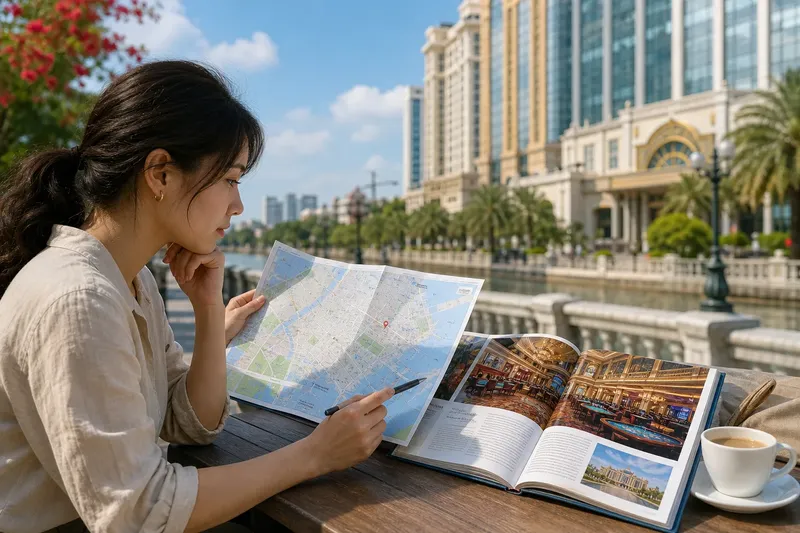
Casino maps and city guides can make the same Hải Phòng venue look like two different kinds of place. A map may mark a casino within a hotel complex; a guide may discuss it as part of a leisure district. The difference often comes from what each source counts as the venue.
That boundary matters more than the familiar distinction between finding a place and interpreting it. A map’s marker might sit on a hotel, an entrance or a whole property. A guide’s description might refer to the casino alone, or to the wider complex. Compare those boundaries first, and the sources become easier to read.
Casino maps use boundaries that can hide the venue’s scale
A map has to assign a place a name and position. For a casino within a hotel or larger property, that can mean a marker for the whole complex, a label for the hotel, or a separate point of interest for the casino. Each choice offers a different picture of the site.
Look at the map’s labels, not just its pin. Does it name the casino, the hotel, or both? Are nearby roads, entrances or other buildings shown? A marker beside a hotel name does not establish that the casino has a separate entrance or occupies the whole property.
Maps also make proximity look simple. Two labels close together may belong to one complex, while a single label may cover several functions. Treat the map like a filing cabinet: the label tells you which drawer to open, not everything stored inside it.
City guides choose a frame for the same site
A guide decides what the venue represents in its account of Hải Phòng. It may mention the casino as part of a hotel, an entertainment option or a wider leisure setting. Those descriptions frame the site for a reader; they do not necessarily define its physical boundaries.
Read the entries around the casino as well as the sentence about it. A guide that groups it with accommodation and dining presents a different urban picture from one that places it among nightlife or visitor attractions. The grouping is an editorial choice, not a description of how every visitor uses the area.
Watch for broad labels such as “resort” or “destination”. They can refer to a larger property rather than the casino’s own rooms and facilities. If the distinction affects a visit, check the venue’s current official information for operational details.
Compare the labels before comparing the descriptions
Begin with names. Match the map label to the guide’s wording, then ask whether both refer to the same thing: the casino, its hotel, or the wider complex. If the names differ, nearby landmarks and street labels may help clarify the map’s scope, while the guide’s surrounding text may clarify its editorial scope.
Next, separate what each source states from what it implies. A map can show a casino near a hotel or commercial area; it cannot establish how the venue relates to those places in everyday use. A guide can describe a leisure district; it cannot confirm the precise position of an entrance.
Imagine a visitor finds a map pin labelled with a hotel’s name and a separate guide entry that calls the casino part of an entertainment complex. The visitor notes that the map identifies the hotel, checks whether it marks the casino separately, and reads the guide’s neighbouring entries to see what the phrase “entertainment complex” covers. The resulting judgement is that the sources may describe different boundaries, not conflicting locations; the actual entrance still needs confirmation from current venue information.
- Check the map’s main label. If it names the casino, treat the pin as a casino location; if it names a hotel or property, look for a separate casino listing before assuming the pin marks the casino itself.
- Check whether the map shows a separate point of interest. If it does, compare that point with the hotel marker; if it does not, use the property address only as a broader location clue.
- Check the guide’s subject. If its wording refers to the casino, read it as a venue description; if it refers to a resort or complex, do not assume every detail applies to the casino alone.
- Check the guide’s neighbouring entries. If it groups the venue with hotels or dining, read that as a hospitality frame; if it groups it with nightlife or attractions, read it as a leisure frame rather than proof of a fixed district boundary.
- Check street and landmark labels. If they clarify which property the map pin covers, use them to distinguish the site; if they do not, avoid inferring a specific entrance from the pin.
- Check whether the difference affects a visit. If it concerns a current entrance, access condition or facility, consult the venue’s official information; if it concerns how the place is presented, compare the map’s labels with the guide’s framing.
Why can a map and a guide name different places?
Does a map pin mark the casino entrance?
Not necessarily. The pin may identify the hotel or larger property, so check for a separate casino label and confirm the entrance through current venue information if you need to visit.
Why does a city guide call a casino a resort?
The guide may be describing the broader property or its relationship to accommodation and leisure. Read the surrounding text to see whether “resort” refers to the casino itself or the whole site.
Which source should I trust if the names differ?
Use each source for the kind of detail it actually supplies: a map for labelled locations and a guide for editorial framing. For current names, access or facilities, check the venue’s own information.
What a map-and-guide comparison can establish
Comparing casino maps and city guides can show whether a venue is presented as a distinct attraction or as one part of a larger Hải Phòng property. It can also reveal when a map label and a guide description operate at different scales. Neither source alone settles every question about the site.
For example, a map may identify a hotel complex while a guide places its casino within the city’s leisure offer. That is useful context, but it does not confirm the casino’s exact entrance, current access or facilities. Use current venue information for those details, and treat the comparison as a way to understand how the place is named and framed.